1. Introduction
Cu Chi is best known for its extraordinary network of underground tunnels, but a trip here is about much more than a single historic site. Located just northwest of Ho Chi Minh City, this rural district offers a glimpse of the Vietnamese countryside, wartime history, and slow‑paced local life, all within an easy day trip or short stay from the city.
This guide will help you plan a trip to Cu Chi that goes beyond a rushed tour. You will find practical advice on how to get there, what to see beyond the famous tunnels, where to eat, how long to stay, and how to combine Cu Chi with other nearby destinations. Whether you are considering a half‑day visit or a two‑day countryside break, visiting Cu Chi can easily fit into a broader Vietnam itinerary.
Good to know: Most visitors experience Cu Chi as a half‑day or full‑day trip from Ho Chi Minh City, but staying overnight allows you to enjoy a quieter, more authentic atmosphere once the tour buses leave.
2. Geography & Orientation
Cu Chi is a suburban–rural district in the northwest of Ho Chi Minh City, roughly 30–40 km from the city center, depending on where you depart. It lies close to the border with Tay Ninh province, on the way to the Cao Dai Holy See and the Cambodian border.
The district is large and mostly flat, criss‑crossed by small rivers, canals, and a web of rural roads. Two main areas are important for travelers:
Ben Dinh Tunnels: The more visited tunnel site, closer to central Ho Chi Minh City.
Ben Duoc Tunnels: A quieter, more extensive site farther northwest, often considered more authentic.
Travel times vary with traffic, but you should expect:
From central Ho Chi Minh City to Ben Dinh: about 1.5–2 hours by car or bus.
From central Ho Chi Minh City to Ben Duoc: about 2–2.5 hours by car or motorbike.
Tip: If you want a less crowded experience, aim for Ben Duoc and depart early in the morning to arrive before the big tour groups.
3. History & Cultural Context
Cu Chi became globally known during the Vietnam War (called the American War in Vietnam). The tunnel network served as a strategic base for guerrilla fighters, providing shelter, communication routes, and supply lines under heavily bombed terrain.
At their peak, the Cu Chi tunnels stretched for hundreds of kilometers, linking hideouts, meeting rooms, makeshift hospitals, and storage areas. Life underground was harsh; people dealt with darkness, humidity, lack of oxygen, and constant danger. Visiting today offers a vivid, sometimes sobering insight into this period.
Beyond wartime history, Cu Chi remains a traditional agricultural area. Rubber plantations, rice fields, and small family farms still shape the landscape. Local life follows the rhythm of the fields and markets, in contrast with the intense pace of central Ho Chi Minh City.
Respectful behavior: The tunnels are a place of remembrance as well as a tourist attraction. Dress modestly, avoid loud jokes about weapons, and be conscious that many Vietnamese visitors have personal or family connections to this history.
4. The Must‑Sees – Sites & Monuments
4.1 Cu Chi Tunnels (Ben Dinh & Ben Duoc)
For most travelers, the core reason to visit Cu Chi is the tunnel system itself. There are two main complexes open to visitors.
Ben Dinh Tunnels
Closer to Ho Chi Minh City.
More frequented by large tour buses.
Features reconstructed tunnels, examples of traps, and above‑ground exhibits.
Good if you are short on time or prefer a very structured visit.
Ben Duoc Tunnels
Farther from the city and generally quieter.
Contains a larger, less modified portion of the tunnel network.
Stronger sense of authenticity and more local visitors.
Often combined with visits to nearby countryside and temples.
During a standard visit you can expect:
A short historical documentary.
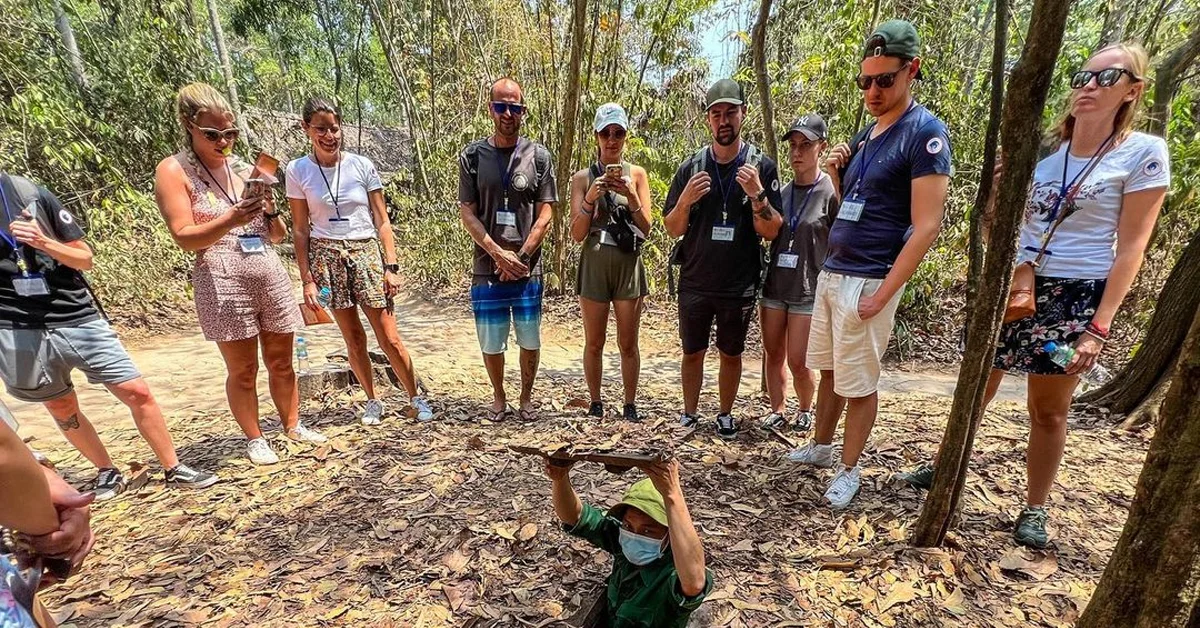
A guided walk through the forest, passing trap demonstrations, air vents, and hidden entrances.
The chance (optional) to crawl through a section of tunnel.
Exhibits on daily life during the war.
A shooting range where visitors can pay to fire historical weapons (optional and quite loud).
Warning: The tunnels are narrow and can feel very claustrophobic. If you suffer from anxiety in enclosed spaces, you can stay above ground while others go inside.
4.2 Ben Duoc Memorial Temple
Close to the Ben Duoc tunnel site stands the Ben Duoc Memorial Temple, dedicated to Vietnamese who died in the Cu Chi area during the war. The complex includes a tall tower, a main hall, and peaceful gardens. It provides a quieter, more reflective atmosphere than the tunnels themselves.
Climb the tower for views over the surrounding countryside and river, and take time to walk around the gardens and incense altars. It is a good counterpoint to the more intense tunnel visit.
4.3 Rural Landscapes & Rubber Plantations
On the way to the tunnels you pass rubber plantations, rice paddies, and simple villages. Many tours include a short stop in a plantation to explain how latex is collected from rubber trees.
If you travel independently by motorbike or private car, you can stop at small roadside cafés, watch farmers at work, and get a feel for everyday rural life in southern Vietnam.
5. Neighborhoods & Areas to Explore
Cu Chi is not a city with clearly defined tourist districts; it is a spread‑out rural district. However, for planning purposes, it helps to think in zones.
5.1 Around Ben Dinh
The Ben Dinh area is closer to Ho Chi Minh City and more developed for tourism. You will find:
The main Ben Dinh tunnel complex.
Parking lots for buses and cars.
A few simple restaurants and souvenir stalls.
Basic guesthouses and homestays scattered in nearby villages.
Staying here is mainly for convenience if you want to visit early in the morning, or if you are traveling overland toward Tay Ninh the next day.
5.2 Around Ben Duoc
The Ben Duoc area feels more rural and less commercial. It is a good base if you want to:
Visit the Ben Duoc tunnels and Memorial Temple.
Explore nearby river landscapes by boat.
Stay in a family‑run homestay and enjoy home‑cooked meals.
You will not find a dense concentration of hotels, but several local homestays and small resorts cater to travelers seeking quiet.
5.3 Cu Chi Town & Countryside
The small Cu Chi town mainly serves local residents and is not a classic sightseeing destination, but it provides markets, street food, and services. Surrounding villages and hamlets are where you experience the agricultural side of Cu Chi.
If you have your own transport, you can spend half a day exploring:
Local morning markets.
Pagodas and small temples.
Riverbanks and canal paths.
Tip: If you are comfortable on a motorbike, visiting Cu Chi by scooter (with or without a guide) gives you far more flexibility to explore beyond the tunnel sites.
6. Food & Gastronomy – Eating in Cu Chi
You will not come to Cu Chi for fine dining, but for simple, local Vietnamese food. Many visitors eat at the restaurants inside or next to the tunnel complexes, which serve familiar southern dishes.
Typical dishes you might find include:
Pho (noodle soup) and hu tieu.
Com tam (broken rice with grilled pork and pickles).
Banh mi (Vietnamese baguette sandwiches).
Stir‑fried vegetables, tofu dishes, and simple soups.
Homestays often provide some of the most memorable meals: shared family dinners with multiple dishes of rice, vegetables, grilled or braised meats, and fresh herbs.
Street‑side cafés and small eateries along the roads sell iced coffee and sugarcane juice, perfect on a hot day. Many also offer ca phe sua da (iced coffee with condensed milk), a southern classic.
Practical tip: A basic local meal usually costs around $2–4 per person. A more generous set dinner at a homestay might be around $8–12 (200,000–300,000 VND) per person, depending on what is included.
7. Nightlife & Evening Atmosphere
Cu Chi is quiet after dark. There is no nightlife scene comparable to Ho Chi Minh City’s bars or clubs. Instead, evenings are about simple pleasures:
Dinners at homestays or local restaurants.
Beer or soft drinks at small roadside eateries.
Early nights to be ready for morning activities.
If you stay overnight, expect a rural, peaceful atmosphere: frogs, crickets, and very dark skies compared to the city. Bring something to read or download movies or series ahead of time if you need evening entertainment.
For travelers who prioritize nightlife, Cu Chi is best visited as a day trip, returning to the city for the evening.
8. Shopping & Local Products
Shopping opportunities in Cu Chi are modest but you can still find some interesting items.
8.1 Souvenirs at the Tunnel Sites
At both Ben Dinh and Ben Duoc, small shops sell:
T‑shirts and hats with Vietnam motifs.
Simple handicrafts.
Replica military items and themed souvenirs.
Note: Replica weapons or ammunition are heavily controlled when flying. It is better to avoid anything that could be problematic at airport security.
8.2 Local Markets
In Cu Chi town and surrounding villages, markets sell mostly everyday goods: fresh produce, clothing, household items. These are not tourist markets, but they are interesting to walk through to observe daily life.
You may find:
Local snacks and sweets.
Dried fruits or nuts.
Simple clothes and sandals at low prices.
Always ask the price in advance and be ready to pay in cash. Haggling is moderate and should remain friendly.
9. Unusual & Alternative Activities
If you want to go beyond the standard Cu Chi tunnel visit, there are several less common experiences to consider.
9.1 Cycling Through the Countryside
Cu Chi’s flat terrain and network of small roads make it ideal for cycling tours. Some agencies and homestays offer guided rides that pass through:
Rubber plantations.
Rice paddies and vegetable gardens.
Small villages and local markets.
You can stop frequently for photos and short conversations with locals. Morning and late afternoon are the best times to avoid the heat.
9.2 Boat Trips on Rivers and Canals
Sections of Cu Chi lie along rivers and canals that connect to the Saigon River. Some tours use speedboats from Ho Chi Minh City, combining a scenic river journey with a tunnel visit.
If you stay near Ben Duoc, you may be able to organize shorter, local boat trips to see life along the water, fish farms, and riverfront temples.
9.3 Agricultural & Farm Experiences
A few farms and homestays in the wider Cu Chi area offer hands‑on experiences such as:
Planting or harvesting seasonal crops.
Learning about rubber tapping or mushroom cultivation.
Trying basic fishing techniques in ponds or canals.
These activities are simple but memorable, especially for families.
Tip: Ask your homestay or guesthouse in advance what activities they can arrange. Many are informal and only available if you request them ahead of time.
10. Excursions from Cu Chi
Cu Chi is well‑placed as a springboard for other destinations in southern Vietnam.
10.1 Tay Ninh & Cao Dai Temple
From Cu Chi it is relatively easy to continue northwest to Tay Ninh, home of the Cao Dai Holy See, one of Vietnam’s most striking religious buildings. The temple is famous for its colorful architecture and daily ceremonies.
Many travelers visit Tay Ninh and Cu Chi in the same day from Ho Chi Minh City, but you can also go from Cu Chi to Tay Ninh and stay there overnight.
10.2 Ho Chi Minh City
Cu Chi is administratively part of Ho Chi Minh City, and almost all visitors combine the two. Central Ho Chi Minh City offers:
Major museums and historic buildings.
Vibrant food and nightlife.
A wide range of hotels, from budget to luxury.
Visiting Cu Chi as a day trip gives you the contrast between the metropolis and the countryside within a single day.
10.3 Mekong Delta (via Ho Chi Minh City)
If you are structuring a broader itinerary, you might:
Spend several days in Ho Chi Minh City.
Take a day trip or overnight trip to Cu Chi.
Then head south to the Mekong Delta for river life, floating markets, and fruit orchards.
This sequence works well logistically and thematically: city, war history and countryside, then river landscapes.
11. Practical Information
11.1 When to Visit Cu Chi
Cu Chi shares the climate of southern Vietnam: a tropical climate with distinct dry and rainy seasons.
Dry season (roughly December to April): Hot, generally sunny, easier for walking and cycling.
Rainy season (roughly May to November): Short, heavy showers, especially in the afternoon; countryside is greener.
Below is an indicative climate table for plan afternoon; countryside is greener.
Below is an indicative climate table for planning:
Month | Typical daytime high | Rainfall pattern |
|---|---|---|
Jan–Mar | Around 90°F (32°C) | Very little rain |
Apr–Jun | 91–95°F (33–35°C) | Increasing showers, often late day |
Jul–Sep | Around 90°F (32°C) | Frequent heavy showers |
Oct–Nov | 88–90°F (31–32°C) | Showers gradually decrease |
Dec | Around 88°F (31°C) | Drier conditions |
Advice: No matter when you go, wear light, breathable clothing, comfortable walking shoes, and bring a hat, sunscreen, and insect repellent.
11.2 How Long to Stay
The time you need in Cu Chi depends on your interests:
Half‑day: Quick visit to one tunnel site from Ho Chi Minh City, usually morning or afternoon.
Full day: Tunnels plus a countryside activity (cycling, plantation visit, or river trip).
1–2 nights: For a deeper rural experience, slower pace, and excursions to Tay Ninh.
For most travelers, visiting Cu Chi as a full‑day trip or one‑night stay is ideal.
11.3 Getting to Cu Chi
Several transport options connect Ho Chi Minh City with Cu Chi.
Option | Time (one way) | Approximate cost | Notes |
|---|---|---|---|
Group tour by bus | 1.5–2 hours | From about $25–40 (625,000–1,000,000 VND) per person | Includes transport, guide, entrance; easy and social |
Private car with driver | 1.5–2 hours | From about $60–100 (1,500,000–2,500,000 VND) per car | Flexible schedule, good for groups or families |
Speedboat tour | About 1.5 hours | Typically $80–120 (2,000,000–3,000,000 VND) per person | Scenic river route, higher cost, often includes meals |
Public bus + taxi | 2–3+ hours | Around $3–6 total | Cheapest but slowest and least straightforward for first‑time visitors |
Tip: For a first visit, a group tour or private car makes the experience simpler and more efficient. Speedboat tours are an excellent choice if you like being on the water and want a different perspective on the region.
11.4 Entrance Fees & Additional Costs
Entrance fees change over time, but you can expect roughly:
Tunnel entrance: Around $5–10 (125,000–250,000 VND) per adult.
Shooting range: Charged per bullet; costs add up quickly.
Guide (if not included in a tour): A small additional fee or tip.
Always check current prices with your tour provider or at the entrance.
11.5 Where to Stay
Accommodation in Cu Chi is limited compared to Ho Chi Minh City, but a few options exist:
Homestays: Simple rooms in family homes, often including breakfast and dinner; typically $15–30 (375,000–750,000 VND) per night.
Small resorts or eco‑lodges: More comfortable settings with gardens or pools; usually $35–70 (875,000–1,750,000 VND) per night.
Guesthouses: Basic, no‑frills lodging in town; often $10–20 (250,000–500,000 VND) per night.
If you prefer a wider range of hotels, it is easy to base yourself in central Ho Chi Minh City and treat Cu Chi as a day trip.
11.6 Budget: How Much to Plan
Your Cu Chi travel budget depends on how you organize the trip. Here is an approximate per‑person daily budget if you include transport from Ho Chi Minh City.
Travel style | What it includes | Typical daily cost |
|---|---|---|
Budget day trip | Public bus or cheapest tour, tunnel entrance, simple meals | Around $25–40 (625,000–1,000,000 VND) |
Comfortable day trip | Standard group tour or shared speedboat, entrance, lunch | Around $50–90 (1,250,000–2,250,000 VND) |
Overnight mid‑range | Private car share, homestay with meals, tunnels, extra activity | Around $70–120 (1,750,000–3,000,000 VND) |
These figures do not include shopping or expensive optional activities like extensive shooting at the range.
11.7 Safety & Health
Cu Chi is generally safe for travelers. Standard precautions apply:
Watch your step on uneven paths and in forested areas.
Stay hydrated and protect yourself from the sun.
Use insect repellent, especially in the rainy season.
Follow all safety instructions around the shooting range and do not approach weapons unless supervised.
Medical facilities are basic in the immediate area, so keep any essential medication with you and return to Ho Chi Minh City for serious issues.
12. Suggested Itineraries
The following itineraries will help you decide what to do in Cu Chi depending on your timeframe and interests.
12.1 Classic Half‑Day from Ho Chi Minh City
Best for travelers with limited time who mainly want to see the Cu Chi tunnels.
Early morning departure from Ho Chi Minh City.
Arrive at either Ben Dinh or Ben Duoc tunnel site.
Watch the introductory film and follow a guided tour of the grounds.
Optional: Crawl through a section of tunnel.
Quick lunch at the on‑site restaurant or nearby.
Return to Ho Chi Minh City by mid‑afternoon or evening.
This option is straightforward and fits easily into a busy schedule.
12.2 Full‑Day History & Countryside Experience
Ideal for travelers wanting a richer Cu Chi travel experience.
Early departure from Ho Chi Minh City.
Visit Ben Duoc tunnels and Memorial Temple.
Lunch at a local restaurant or homestay.
Afternoon cycling or short boat trip in the countryside.
Late afternoon return to Ho Chi Minh City.
Alternatively, you can stay overnight in Cu Chi after the day’s activities to enjoy a quiet evening.
12.3 Two‑Day Cu Chi & Tay Ninh
Perfect for those who want to combine war history, rural life, and religious culture.
Day 1 – Cu Chi
Travel from Ho Chi Minh City to Cu Chi.
Visit the tunnels and Memorial Temple.
Check into a homestay.
Late afternoon walk or bicycle ride through the fields.
Dinner and overnight in Cu Chi.
Day 2 – Tay Ninh
Morning departure to Tay Ninh.
Visit the Cao Dai Holy See and observe a ceremony.
Lunch in Tay Ninh.
Return to Ho Chi Minh City in the late afternoon or evening.
12.4 Cu Chi for Families
Cu Chi can be very educational for children, though some elements of the war exhibits can be intense.
Choose Ben Dinh or Ben Duoc depending on your children’s ages and comfort.
Focus on the historical lessons and daily life aspects rather than the more graphic displays.
Combine the tunnels with a fun activity such as cycling, a boat trip, or a farm visit.
Family tip: Bring snacks, water, and a hat for each child. Explain the context of the war in age‑appropriate terms before visiting the tunnels.
13. Conclusion
A trip to Cu Chi adds powerful context to any journey through southern Vietnam. It reveals how people adapted and survived during war, while also offering a window into today’s rural life just beyond the reach of Ho Chi Minh City’s skyscrapers.
Whether you choose a brief visit to the Cu Chi tunnels, a full‑day countryside immersion, or a two‑day circuit including Tay Ninh, the experience is likely to stay with you long after you leave. Planning your Cu Chi travel carefully – from transport and timing to the choice between Ben Dinh and Ben Duoc – will help you get the most out of your time in this singular part of Vietnam.
If you share your broader Vietnam itinerary and how many days you plan in Ho Chi Minh City, what kind of Cu Chi experience do you think would fit you best: a quick historical visit, a slow rural stay, or a combined route with Tay Ninh?